A patent is a tool. A portfolio is a strategy. The difference between a collection of individual filings and a coherent IP portfolio is the difference between expense and asset. We help technology companies build patent portfolios that serve defined commercial objectives, whether those objectives involve competitive deterrence, licensing revenue, freedom to operate, or positioning for acquisition.
Portfolio Architecture
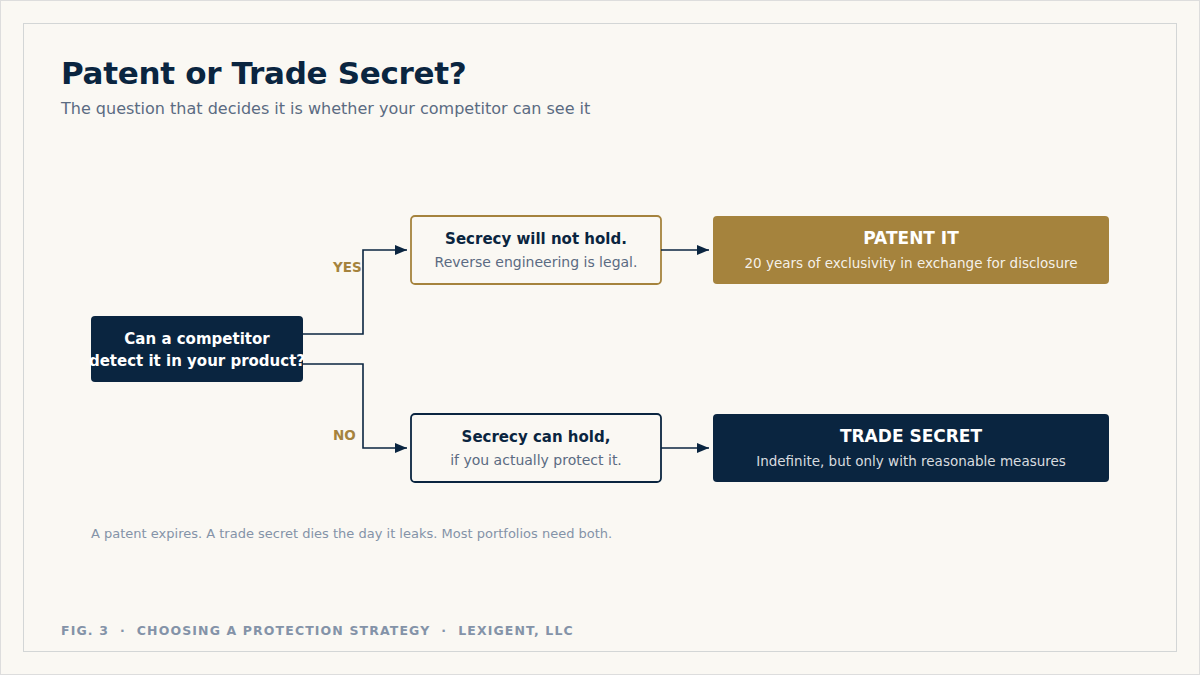
An effective patent portfolio is built around the product line and competitive landscape, not individual inventions in isolation. We work with companies to identify which innovations warrant patent protection, determine the optimal mix of utility patents, design patents, and trade secrets, time filings to the product roadmap and competitive environment, and allocate IP budget for maximum strategic impact. The result is a portfolio where each filing serves a defined purpose within the overall strategy.
Competitive Landscape Analysis
Understanding the existing patent landscape in your technology space is essential to making intelligent filing decisions. We analyze competitor patent portfolios, identify gaps and opportunities, and design claim strategies that establish defensible positions in the areas that matter most to your business. This analysis also informs freedom-to-operate decisions and identifies potential licensing targets or threats.
Exit-Oriented IP Planning
For companies building toward acquisition, the patent portfolio is one of the first assets a buyer evaluates. Acquirers assess whether the portfolio covers the products generating revenue, whether the claims are defensible, and whether there are continuation opportunities for future filings. We build portfolios with these evaluation criteria in mind from the earliest filings, so the IP is transaction-ready when the time comes.
Startup IP Strategy
Early-stage companies face unique IP challenges: limited budgets, uncertain product direction, and the need to demonstrate IP protection to investors. We help startups prioritize filings, use provisional applications strategically, and build the minimum viable IP portfolio that protects core technology while preserving capital. As the company grows and raises additional capital, the portfolio strategy scales with it.
Licensing and Monetization
For companies with patents that cover technology used by others, licensing can generate revenue without manufacturing or selling products. We help identify licensing opportunities, structure licensing agreements, and navigate the negotiation process. For companies receiving licensing demands, we assess the validity and applicability of asserted patents and advise on response strategy.
Get Started
To discuss IP strategy for your company, schedule a consultation.